The Complainer

Her favorite person came at her with sharp tongue. Despite that, she asked of her, “How are you doing these days?” in a most pleasant tone.

“How come you’re always in my business?” came the reply.

Not sure why that was offensive, she stopped asking questions of her.

When sharp tongue asked her how she looked in a certain outfit, her reply wasn’t offensive, nor was it complimentary, it was akin to… meh.

“You are always criticizing,” she accused.

Not sure how or when she criticized, she stopped talking.

The sharp tongue bit again the next time she saw her, “You are always hearing things wrong,” she said forcefully.

Not sure how or when or what she heard wrong, she stopped listening and busied her mind with other things when the sharp tongue was speaking.

Undeterred, the sharp tongue snipped at her at their next meeting with, “You always see the negative side of things,” she said cuttingly.

Not sure how or when, she stopped looking when sharp tongue was nearby.

Thinking she was winning, the sharp tongue bristled at her the next time with, “Why is it you always notice when bad things happen.”

Only left with intuition, she chose to become energy and–left.

The sharp tongue cried, clasped hands to her breast and lamented to all who could hear her, “Why is she never around when I need her?”

The conversation among “professionals” who should know better

The subject: Media attention about a young Black 16-year-old female being body slammed out of her seat in a classroom (October 2015).

10/31/15 response (original): Male #1

Is it me, or do I just not get it?  I am having trouble fully understanding the developments following the incident wherein the young high school girl was dragged from her chair and thrown across the room.

Let’s review the circumstances shall we?  First there came the report on all major news channels of a young Black girl being roughly handled by a Student Resource Officer (SRO), which resulted in her being wrestled from her chair, dragged or slung across a room (dependent upon your perspective of the takedown technique), and forcibly handcuffed.  This activity was done in full view of the teacher, an administrator, and ostensibly, the school’s principal. If your viewing experience was anywhere close to mine, the scene was looped at least 12 times while the newscasters discussed the horror of it and/or the outlandishness of it. In fact, the newscasters almost to the individual demanded to know why or how such a thing could happen.

What seems to be missing, in my opinion, is an objective look at how this interaction could have happened and what might be changed to prevent it from happening again if that is the desired outcome.  I take this stance because there appear to be some roles, rules, and obligations that have either been misunderstood or misplaced by those reporting the incident.

To begin with, the video clearly shows that there was a student who was disrupting a classroom full of other students whom presumably wanted to learn the lesson for the day.  Said disruptive student was, approached by a duly sworn officer of the law by direction of credible school authorities.  This officer, in the lawful performance of his duties did ask the student to cease and desist and accompany him out of the classroom.  Our student is heard on more than one occasion refusing the officer’s instructions.  (It should be noted here that once the officer instructed the student to come with him, that student was under arrest— control of said officer and there was no longer room for negotiation or arbitration.)

Next, the officer placed his hands on the student to remove her from the desk and the student struck back and fought to stay seated. (At this point, it is my belief–although I am not a lawyer nor an officer of the court–that said student was in full resistance to an arrest.  Also, the student’s struggle, while no apparent threat to the officer, was definitely a vigorous refusal to comply. Such refusal was met with increased asserting of force to gain compliance by the officer. (The force used by the officer was viewed by his superiors and determined to be excessive and resulted in the officer being terminated from employment.

The aftermath of this episode was replete with accusations that the SRO was out of line, the student’s teachers should have maintained control of the situation, and that school misused the SRO by requesting him to remove the student.  However, if we look more closely at that situation, we will see that the teacher clearly had a student who was not complying with requests to cease her disruptive behavior. Further, the presence of a school administrator suggests that all of the teacher’s efforts and options were unsuccessful and exhausted.  So, if the teacher had tried to physically remove the student or stop her disruptive behavior, the student would then be in a position to sue the teacher and would probably win that action. Hence, the resort to the SRO.

Finally, the student has now complained of pain in her arm or shoulder and headaches.  These claims seem to be the preamble for claims for monetary compensation due to extensive injuries.  It is at this juncture we hear from the now distraught parents of the poor, abused, faultless prodigy.  What we have not heard, nor probably will ever hear is why the parents would tolerate her child acting out in school to that degree under any circumstance.  Absent also is the hue and cry for lack of authority high school teachers have over their students so that those teacher might be able to better control their classes.  We, in my opinion, are seeing the results of years of stripping teachers from the ability to confront and react to students and placing that authority outside academia. As a note, we must remember, just because high school students are not fully grown does not mean that they are stupid.  They know full well that teachers have no power over them so those students do not respect nor fear consequences from the teachers.  As a result, the students feel free to act any way they please. And they do.  Just a thought.

10/31/15 response: Male #3

Having dealt with surly students for many years at (west coast schools), I can say with some authority, this officer was waaay out of line. You don’t snatch a 16-year-old kid by the neck, slam her to the ground and toss her across the room. This is absolutely ridiculous. Teens especially are obnoxious. You would love to do this every day. But you have to use common sense. This was all over a cell phone, which she was using but not to the extent that the entire class was listening to her conversation. She just refused to put it down, as most of them do. But you don’t need to act like they’re criminals when you’re dealing with INAPPROPRIATE behavior and not ILLEGAL behavior. Would you like it if (your daughter) were treated this way? I think not. What they should have done was call her father or mother. If she didn’t behave, they should have told her at the end of the day, she cannot return to school unless she is accompanied by a parent. That’s it. But there’s always a much hasher reaction to black kids than white kids even if they do the same thing. All kids can be annoying. It’s just that when our’s (sic) are, they are automatically criminalized or slaughtered. When white kids are defiant, they are “speaking their minds,” “standing up to (unwarranted) authority,” “showing spunk,” and all that b.s. When Black kids do it, they’re “breaking the law,” “endangering others,” etc. This has nothing to do with reporting the incident but everything to do with America’s double standard when policing people of color. They HATE us for resisting any kind of rules, good or bad. Remember Jim Crow?

11/1/15 response (to male #1): Carol

Okay, I accept that as your opinion. But I have seen the texts of other students [who] were in the classroom that day who said she [the student] was quiet and not disruptive, but the teacher became annoyed when she pulled out her phone and when he demanded she give it to him she refused.

You asked about her parents, and further information shows that both her grandmother and mother died a few months apart and earlier this year and she had been put into foster care. So she had a lot of grief that was too much for her to handle already; the teacher should have known that.

The shock, trauma, dislocation, grief of her situation is mind boggling for an adult, more so for a teenager who is suddenly without a base, a connection to family.

Having had my brief stint teaching 7th graders, I know how frustrating they can be, and we had our own seven to frustrate us through their teen years as well. But given that, I see no reason a weight lifting body builder (I saw the pictures) has to resort to manhandling a child, anybody’s child. As frustrating as my own kids could be at any given time, that would have even pushed me over the edge as a parent.

This kid probably sees herself as alone in this fog of a school system and thinking as a kid does, that if she’s not loud or disruptive she’s not causing any problems, she would be resistive to being put out of class. In her mind (possibly) another rejection and loss when she (probably) didn’t think she was doing anything wrong.

One news source said her arm was broken, under what law is it okay to abuse a child? If it was my child and I swooped into the classroom and did that to my own child media would throw everything it has into villianizing me as a parent. So why is it okay for a grown assed man to do that to a child half his size and weight? What goes through a man’s mind that this is the way to handle a female? If your daughter’s boyfriend did that to your daughter because he said she was disrespecting him, would you approve and support him, or kick his ass for hitting a female?

And I can tell you for sure that your instincts kick in when someone is attacking you and you will strike out. But somehow we’ve made it against the law to try to protect one’s self from harm when being attacked, especially by law enforcement.

When you see someone getting ready to punch you in the face and your arms come up automatically to protect your face, it’s now a criminal act. But show me any man, woman, or child who will keep their arms pinned against their sides and ALLOW themselves to be struck. Any takers? But we’ve outlawed reflexive bodily actions, too.

It is clearly evident that the Black-white issue is part of this scenario so let’s deal with that. Picture the pretty petite blonde in that chair and tell me that without a doubt she would have been manhandled the same way and I will call you a liar. I know that had it been a white kid he would had tilted that chair backwards and drug the chair with blondie in it out into the hallway.

Why is it okay for an adult seeing that to say it’s an appropriate action for an adult-to-child intervention is beyond me. Why the increased violence against men, women and children of color (remember the officer sitting on that tiny Black girl at the pool party?) is viewed as a “they should have obeyed the law” mentality hurts me to the core. Didn’t the Jews quietly obey the Nazi soldiers and did as they were told? And what was the result of that? The Nazis stopped abusing them? So we know from history that that’s not the answer to brutality against another group of people either.

I know kids can be mean, violent, disruptive, loud mouthed, all that, but when we, as a nation, decide that violence towards them is appropriate and welcomed we have definitely lost our humanity. We are admitting that adult minds cannot find a peaceful solution to a problem that has been with us for all the generations it’s been since laws were made to prevent parents from disciplining their own children, and preventing schools from being able to discipline them short of incarceration. And if you can’t see this same scenario used on other faces, or in other situations, something is wrong with that picture.

You need to rethink this, (male #1)

11/1/15 response (to male #1): Male #4

Amen

11/1/15 response: Carol

(Male #3), I’m including your response to me (and male #1) to this general conversation because I think the discussion is necessary to others’ points of view, and I welcome those viewpoints. We NEED discussions like this.

After my response to (male #1), I read the following article in The New Yorker, and learned even more, that in Alabama disruption of a classroom is cause for a fine and INCARCERATION!  Imagine that!  I wonder how many white kids have been incarcerated in that state versus how many of them are just not reported, or the kid’s disruption classified as something else to keep them from going to jail.  Now the girl who was horrified by what she was witnessing has a record of arrest as well as being suspended.

And the sheriff, well he did say that what Fields (who already had a bad reputation) did was wrong, but he even clarified what he meant by that when he said that only when Fields threw the girl across the room was he “crossed the line.”  The choke hold attempt and snatching her was okay, though. And, again, the students supported the fact that it was only the teacher who was annoyed that the student wouldn’t turn over her phone that started this whole mess. If this is the way we handle inappropriate behavior, as (male #3) said, how do we handle it when a kid gets into a fight?  All disruptions are equal in the state of Alabama, and that speaks to how intolerant and ignorant the adults are who made those laws.

(male #3) is so right.  As I also said, kids, especially at the teenage level, have so much to learn about how to behave, and you can’t tie everyone’s hands to lessen the penalties and only leave incarceration as the only option, but they did and you know who that impacts more than any others.

To have a world of adults signifying that she got what she deserved, but only one peer standing up for her (and herself punished for it) says a lot for this country and how they view females, females of color, and people of color in general; there is no way around that viewpoint. Again, by example, we are telling females they have no worth, so how are you going to tell the Good Ol’ Boy On the Corner that he can’t beat the sh*t out of his girlfriend? Are you just going to say that this publicized beating of a girl on a video that went worldwide, is the exception?

In addition to (male #3) response below this, please read: http://www.newyorker.com/news/amy-davidson/what-niya-kenny-saw

11/1/15 response (originally generated discussion): Male #1

Carol:

You and (male #3) take very similar stances regarding the wrongness or disproportionate use of force on a young Black girl.  Your points find some support in the fact that the Student Resource Officer (SRO) was fired by the Sheriff after a brief investigation.  The firing was based on the SRO’s failure to follow established procedures during his encounter with the student.

I would, however, entreat you both to another vantage in that the entire situation was ripe for confrontation from the beginning.  Whatever the confrontation was to be, the outcome was inevitably going to be bad.  To begin with, the student failed to follow direct instructions from the teacher (who’s race is unknown) and the administrator (who is Black) by not handing over the cell phone.  All other descriptions of the incident are merely incidental at this point because the situation then shifted from a student-teacher disconnect to a power struggle between a student and the institution.  Whoever called the SRO into the scenario is up for questioning, but the result was the introduction of a law enforcement representative into a power confrontation.  Having dealt with policing and law enforcement organizations in a supportive role for most of my adult life, I can tell you without equivocation that when such an individual or individuals enter into a highly charged situation as presented here, they are focused on containing the issue and removing the discord.  This is not a stance of negotiation or discussion.  It is strictly a force-on-force situation and the law enforcement individuals are trained to win.

To the bigger issues I would pose the following:

  1. When school systems choose to utilize law enforcement personnel to maintain order in the classrooms because current laws prevent teachers from doing it, all interactions between students and SRO-type personnel will become criminal or near-criminal instances. It then should force us as a society to decide whether this model is the type of learning tool we wish to employ.
  1. All students (especially African American students) should be TAUGHT that there is no negotiating with police personnel engaged in enforcing the law. It is a power situation and the police are trained, authorized, and determined to win.
  1. Students need to understand that in the real world (one they are ostensibly preparing to enter as active, capable participants) there are power relationships that exist and those power sources do not give way to student petulence, tragic home life situations, or false impressions of their rights in the larger scheme of things.  It is, in my opinion, a catastrophic failure occurred on the part of the teaching staff at the school where this incident happened that enabled the students to presume that continued resistance to authority would amount to continued tolerance with no consequences.

By the way, I reject the entire notion that the student was not disruptive because the administrator and the teacher were both present before the SRO appeared on the scene.  It is established that both had attempted to get the cell phone from the student to no avail, which resulted in the escalation to the point of violence.

11/1/15 response: Male #2

Hey Y’all

We all have seen the video clips and have read varying accounts of what led to the removal of this young lady from the class. The starting point of any of our knowledge of any of the facts is the portion of the video that was shown, and from the point they chose to make public. We have no way of knowing if that was the entire episode, or what happened to or after the portion shown. Nor do we know this child’s background, again, other than what was published. And while the natural knee-jerk reaction is to pity this “poor child” and demonize the RSO, I find it interesting that those who do know the whole story; her classmates, staged a walk-out in support of the Officer and denouncing his removal. It is noted that those classmates were multi-racial, male and female. Click on the link below for the story.

I agree with (male #1) in that we must keep in focus the purpose of organized education and the duty owed to all of the students who are there presumptively to be educated. Nowhere in any of the articles I have read is there any mention or acknowledgement of the rights of the other students to realize their expectation of an environment conducive to their education. Nor is there any such mention or acknowledgment of the obligation of the school, the teachers, the principal and others to ensure that the mentioned conducive environment is maintained for the benefit of those law-abiding students.

It is not by happenstance that our schools now, in too many cases, are like fortresses, with police officers positioned on the premises, and officers on hand as in this case, to take over when school officials exhaust their ability to deal with students. Teaching has become, unfortunately, a hazardous profession, due in great part to our misguided youth who feel that they do not have to comply with rules, regulations, orders or anything that they don’t agree with. Teachers are being physically attacked by students, as the second link will bear out.  I am sure that most of you have seen or have knowledge of other such incidents.

My guess is that this did not start with this young lady at this point, but rather that she has no doubt been accustomed to having it “her way”. After having been asked by two officials, and her refusal to comply left no other choice other than to bring in the RSO. Had she been allowed to get away with her aberrant misbehavior, it is predictable that the other students witnessing that, or some of them would have believed that they could get away with the same in the future, and the authority of the school’s officials will have been irreparable damaged. What I see here is learned and tolerated behavior which, as stated, did not start at this point, but more likely than not was a way of life for this young lady. As to whether the officer’s conduct was “over the top”, that is the province of those who employed him, and their decision I do not question. In view of the students’ support of the officer, however, it is clear that they, knowing all of the facts, come down on the

side of the officer.

http://www.cbsnews.com/news/south-carolina-students-stage-walkout-to-support-fired-deputy/

http://ietv.co/1LCBix9

Be Blessed

11/2/15 response: Male #1

Thanks (male #4).  This just confirms the old saying that the first reports of an incident is usually not fully accurate.  The tragedy, however, is that most people don’t get the correction and proceed on the basis of the inaccurate data.

11/2/15 response: Male #3

You (male #1) and (male #4) miss the point. The girl is not responsible for stories that emerged from this incident. I find it appalling that because rampant media makes false reporting seems to justify a 16-year-old girl being man-handled by a weight-lifting officer. You cannot under any circumstances justify this. I have been in classrooms. I have seen a lot worse. You CANNOT justify this. Period! A cell phone??? Give me a break. I’ve spent 15 years in(west coast) classrooms — high school and middle school. You have no idea how awful some behavior occurs.

Nonetheless, these children — who by the way are still CHILDREN — are crushed by their terrible dysfunctional families and don’t even know they’re crushed. This is what I find appalling. Most of them, like all children, have no idea there are other means of responding from the way they choose. Kids react in kind from what they’ve learned from their environment. They have no control of their environment.

And you are really blessed if someone in your young life comes along to show you there really is another way. That is rare!

You guys act like she’s a calculating adult. She’s a KID for God’s sake! Having raised kids (and half the neighborhood) I know they can drive you crazy. They often do things you absolutely hate. But that does not mean you should beat and abuse them for defiance. It doesn’t work like that. You don’t criminalize them for annoyance or making mistakes. I ask you: Is it more important to crush juveniles than to have compassion for them? Really??

love you man,

11/2/15 response: Male #1

(Male #3),

I shared the background of my friends, who are also part of my church family in (my city), because they demonstrate the type of thinking that will be applied to decipher the wrongs and rights of the subject situation.  One of the major points that will be discussed as this issue is arbitrated is that once the SRO became involved with the student, the situation transferred from being an academic issue to a law enforcement moment.  To that end, no scholastic rationale will be applied.  The facts will be examined, the actions will be reviewed, and a legal decision will be rendered.  Whether it was “over the top” action on the part of the SRO will only be an influencer of the degree of punishment rendered to the student who disrupted the classroom and caused this situation to occur.  Just a thought.

11/2/15 response: Male #3

I’m not impressed with their credentials. I’m impressed if they have God-given sense. Ben Carson is a great example of high intelligence and utter nonsense. I have more experience in the classroom than any of those guys. I’d be body-slamming all day from what I’ve been through. A cell phone ain’t really that big of a deal. Trust me.

love you man,

11/2 response: Male #1

All:

I wanted to give you guys some background information on some of the people responding to our most recent string of emails. Two of the respondents are Bill and (male #2). Bill is an attorney working for the (government). (Male #2) is an attorney who is in private practice and who is licensed to argue before the United States Supreme Court (and he has done so on a few occasions). I share this with you so that you can appreciate that the responses they provided are not capricious nor arbitrary. They both tend to apply cogent and deliberate thought to their responses in addition to researching multiple vantage points before responding.

Just thought that might assist you in gaging the merit of their rejoinders.

11/3/15 response: Carol

What I see clearly from your responses is that the experiences of (male #3) and I, both dealing with young people for a long period of time, were dismissed almost as if insignificant. When you said, “… when such an individual or individuals enter into a highly charged situation as presented here, they are focused on containing the issue and removing the discord.  This is not a stance of negotiation or discussion.  It is strictly a force-on-force situation and the law enforcement individuals are trained to win,” I cringed.  Literally, cringed.  Fully charged?  Was then when the man entered the room and pushed all the other desks away from hers in order to attack her?

It reads as though the police are equated with the military and the humanity is removed from a situation dealing with a child.  You are still looking at this through a military lens where force outweighs empathy, humanity, and a need to understand children’s nature.  In no way would I have supported this either in my 7th grade classroom, nor with my children.  And I can tell you for a fact that I have left work early and confronted teachers who thought it was okay to abuse my child (one was no longer teaching there the next semester).  No, my kids weren’t disruptive like this, but what does the degree of disruption matter?  I see a child being attacked by a man.  A girl by a man twice her size.  A Black female by a white male.  How any parent, especially those of color and fathers, can look at that and think it was okay at any level, I just cannot fathom.  And this level (the cell phone) was petty at best.

Again, you said something else similar with, “All students (especially African American students) should be TAUGHT that there is no negotiating with police personnel engaged in enforcing the law. It is a power situation and the police are trained, authorized, and determined to win.”  Some teachers have absolutely no patience and should not be in that professionPERIOD  Prior to the police in the classroom there was a long period of years when teachers had taken it upon themselves to medicate students that they decided were unruly.  Prior to that, the teachers were forcing parents to medicate their kids if they could not sit still for 50-minutes an hour.  Unless a student is fighting another student, or threatening (I mean actually threatening, not imagined threat) the teacher, police do not need to be in the classroom.

You fall back on the fact that the teacher wasn’t able to get the cell phone from the student without knowing what the policy of the school is towards students having cell phones. But most of all, you of all people, support a lightweight female being physically abused by a male body building weight lifter, makes me physically ill.  In what world did you grow up in where that was acceptable?  Did you purposefully not address my question about substituting (your daughters) into that scenario and still thinking it was acceptable?

You and (male #2) (who I do not know), and I guess your church family as well, all impose a military-like view of what schools are, or should be, totally obedient children, obeying adults without any pushback.  Where do either of you live?  Do you personally know any teenagers?  (male #2) called the girl’s refusal to hand over a phone “aberrant misbehavior,” which means abnormal, unusual, deviant.  There was nothing “aberrant” about her behavior, it, like (male #3) said, is typical teenage behavior.  The kind of behavior that should result in a note from the teacher to the (foster) parent for a meeting, or after school detention.  In no way does it warrant a grown-assed man physically attacking a female.

That you both seem to feel that the behavior of that man towards that child was okay, or necessary, or warranted, makes me want to weep. (Male #2) doesn’t feel the violence perpetrated on that child need be questioned.  So now, between the two of you so far, you’ve got me cringing, being physically ill, and now weeping.

You have daughters, but you find this appropriate.  You think in a “remove the threat” mentality when there was no threat.  Misbehavior, yes, danger, threat, violence, no.  And (male #2) even thought that the fact that some (multi-cultural) students protested in support of that vile man you approve of is evidence of no wrongdoing here.  Disregarded was the fact that there were several tweets from students INSIDE THE CLASSROOM at the time of the event, who felt the man (Officer Slam) was out of his frickin’ mind.  They also said that the girl wasn’t mouthing off, or being loud, just not giving up her phone.  The after-the-fact protest was media intent, I’ll bet.

Your responses make me think of Ben Carson calling Obama’s healthcare policy (so that ALL people can have healthcare) as something to be compared with Hitler or the Nazis.  It’s like some people are convinced that whenever humanity is involved, it should be supported by resistance and responding with violence as appropriate.  Who are you?  [Removed personalized statement]

We have a society that is inundated with stimuli constantly.  Everything is done in sound bites, news, weather, announcements, instructions.  Then you pull the student out of their environment and tell them, no DEMAND that they sit still quietly for 50 minutes or be penalized.  I can tell you for another fact that in my graduate school classes (as a teacher and as a student) students didn’t sit still, they played with their phones, did other classwork, and even played on the internet in their classes.  But somehow we expect a child to sit still and not make a sound, and be talked AT for 50 minutes at a time.  Sometimes they are not even allowed to ask questions (I monitored a school for the SDUSD where that happened), but when they push back, GO DIRECTLY TO JAIL, do not pass GO.

I can only assume by your nonchalant response to this girl being abused that you also agree with the Black men being shot and killed at an exorbitant rate that you feel they deserved what they got too, because they did not quietly obey, without question, what they were being told.  Overlooking, of course, all those cases where they were killed even when they obeyed.  Or even in those cases where physical reaction to protecting themselves was deemed by whites as resisting.  Again I ask, who stands silently and allows themselves to be hit, tased, or maced?  Even the ones where the Black men responded politely with “yes, sir,” but still questioned while they were being singled out as they video taped the whole incident, are within their rights.  Are you no longer able to see that not responding physically to being attacked is impossible to expect, yet the laws support it?  Have we really devolved into a obey-or-be-shot society, for man, woman, or child?  And your CHURCH members are down with this (shuddering to picture this).

What I can’t overlook, no matter how hard I try, is that what we all see, the whole world, is that a young Black female was abused in a public way and you sit back and say, in a manner of speaking, she deserved what she got. When I saw the Black man, some other kid’s father, make a three-minute protest in a meeting with administrators about this incident he stated he was standing in place for that girl’s father, I could have hugged him if I could have.  THAT is what a Black man does to protect his children.  When a Black man thinks a white man (publicly or privately) violating a Black girl is okay, approved, warranted, then we have totally lost our culture.

We, as a culture, are already in a precarious state never having fully healed and recovered as a society from the slave era (beginning generations before, but only ending most dramatically in the 60s when you were a kid). Now, with Black fathers like you approving how white men deal with our people, children included, which sends a message all across the world, means that all hope is lost.  The so-called Lynch laws have served their purpose.  When the men are not there to defend the women and children there is no hope until the women, once again, take the leadership and bring some type of dignity back to the culture.

This is shameful on so many levels, and I’m done with this conversation

When a Woman Has Clues to Keep Looking for That Special Guy

When you have clues to keep looking:

If you meet someone who has a grill, a wide array of chains around his neck, rings on his fingers, or a fancy cane, he ain’t about you, boo-boo.

If your guy is over 21, but still sagging and/or only dresses like entertainers, keep looking.

If his mother calls and he ignores her or cusses her out when he answers, he’s going to treat you similarly at some point. Reevaluate before becoming intimate.

If he puts the majority of his money (or yours) on his car every payday, you will always be a sloppy seconds, find your way out the door.

If he introduces himself as Big Daddy, Ice, or Dr Anything, walk away.

If he tells you he has six kids with five different women and loves making babies, it ain’t your time in his life, sweetie. He’s got a quota to meet and you are only a means to get to it.

If one of you isn’t ready for kids and the other is, each of you need to keep looking for a mate that has the same goals. Don’t write to Dr. Phil asking if you should stay in the relationship or have a surprise baby to get your way.

If a big part of his day is standing by his car “people watching,” that’s code for jobless, pretend you didn’t even see him.

If he grabs his penis as he catches your eye, he disrespects you as a thinking woman and only sees you as a sex object. If you choose to begin a relationship with this as a beginning, look forward to a lot of competition.

If he can’t dance without grabbing his crotch, he’s insecure and knows nothing about women. Walk on.

If he demands that you put him on your bank account or credit card, but never puts money in or pay on the card, walk faster.

If he carries a large wad of bills and always flashes it, it’s probably more singles than big bills, but he’s all about show and as soon as the tarnish shows in your relationship, he’s off to someone shinier than you.

If he stares at you across a crowded room and licks his lips continually as he undresses you with his eyes, he’s not looking for a wife, just a playmate for the night.

If he introduces himself as “Uncle ” somebody to your children, listen to the danger signals your brain is giving off. Walk away.

If he demands more attention, the most attention, or to be taken care of BEFORE you tend to the needs of your kids, this will not change except to get worse. Leave now before you become invested.

If he dresses like an older version of your kids, he’s not a man mentally, keep dreaming as you walk away.

If you take him home and the hair on your dog (hackles) raises, leave him at the DOO’.

If you’re religious and he’s not, you may be able to balance that. If you’re religious and he mocks your religious views, he’s testing to see if you’ll worship him first. Step away.

If he’s a laborer and is an honest man, he’s a catch even though you’re an executive somewhere. If he hasn’t worked enough to even develop a résumé, don’t cry later when you can’t make him work.

If he considers welfare good enough to take care of you both, and you buy into that concept, don’t have children. Neither of you are mature enough to procreate.

If he has no ambition to be more than he is and his idea of a good life is hanging with his buds, beer, and fantasy football there’s no room for you. This will not change.

If you ask him where he sees himself in five years and doesn’t mention you, you’re not in his plans for a future. Do NOT question him about whether or not he MEANT to mention you, understand that in his subconscious you don’t even rate in future dreams.

If he always has to be somewhere else during the holidays and doesn’t include you, his real Boo ain’t you.

If he walks through a door first, he thinks of himself first even though he may hold it open to let you enter behind him. He’s showing you at the outset who he is, believe him.

If he admits his job is his first priority and works more hours than he relaxes, you won’t change that, and if that’s important to you let it go.

If he disrespects you in front of his friends, or your family and friends, and pretends he’s joking, he’s not. He’s showing you who he really is and you don’t matter. Believe him.

If you’re new in a relationship with him but he shows jealousy of your relationship with your kids, walk on.

If he is always looking at his watch, texting, or answering his phone (but he’s not on-call medical staff) and he just met you, you will not change him just because you came into his life. So don’t get huffy about who he’s texting, you might get hurt.

If you walk into a bar, club, or bar/club combo and all the wait staff know him by name it’s his lair and you’re just the newest catch.

If you talked for “hours” at your first meeting or on your first date and he makes a mistake on your name, he’s got too many in his mind to keep track of correctly, you’re not that important.

If education is important to you and he talks in a way that you’re correcting him, you’re emasculating him and he won’t take much of it. If it’s that important to you, YOU change your hunting grounds by going to places where educated men hang out.

If you’re the one in the relationship who’s half-stepping but require a man who’s more advanced, you’re overreaching. YOU grow before expecting someone else to “complete” you.

If you spend more time working on the wedding and not the marriage, or can’t see the difference between those two, you’re not ready. Go back to daydreaming, cutting pictures out of wedding books, and adopting more cats. You are not ready. Let HIM keep walking.

If you expect someone to “complete” you, you are, by default, incomplete as a person and should not be in any relationship. Complete yourself. Work on yourself so that you will be able to stand alone if something happens to your mate.

If he ever hits you, no matter what you said, did or did not do, do not—DO NOT say it’s your fault for baiting him. This is a line a real man would never cross. Don’t let that drama play out in your home, especially in front of your kids.

If he walks into your kids’ lives and instantly wants to be the one to discipline them and you let him, you are the one at fault for causing them harm. Leave before you get so enmeshed you can’t see your way out.

If your first thought when you see him is “he’ll make pretty babies,” YOU ain’t ready, babe, leave him alone if he’s not ready.

Repeat after me until this phrase becomes your mantra: A baby will NOT fix a bad relationship. A baby will NOT fix a bad relationship.

If you know he’s been seeing someone other than you, a surprise baby will NOT bring him closer, it will only give you something more to fight about. You will not win this and your baby (babies) will suffer dearly. Fix it at the beginning by leaving before pregnancy results.

Taking men home for a one nighter, or hoping it will turn into more when you have kids (especially boys) will destroy your kids over time, don’t invest the time doing that.

Love at first sight is a Hollywood myth created for mental romance. Attraction is what draws you TO another person; love is a CHOICE that follows.


In Remembrance: Annie Doris Walls Gillard Williams (d. 9/23/2011)

We don’t know as much about a person’s life when they leave us after living apart. Even having gatherings and meeting here and there and phone calls checkups as adults, you miss the intricacies of daily living together.  We see strangers who grew close to our loved one get up and talk about the (now) “saint” who was different from the sister we knew growing up.  Annie Doris was no saint, but this was her moment.

My mother had two sets of kids several years apart (another story). Annie Doris Walls was my mother’s first born (in my mother’s first set of kids).  She grew up and married twice to become Annie Doris Walls Gillard Williams.  We grew up calling her Doris, but most of her adult life she used her first name; something I never knew until I was older. In fact, I was well into my adult years before someone asked me how my sister Annie was doing and I said, “who?”.  She was the oldest of the eight of us, and 12 years older than me.

There were four boys and four girls; children of Ruby Etoy Graham Walls.  Doris obtained her nursing degree and worked at several hospitals before going into private duty nursing when full time work became more difficult.  She had one son, Douglas, by her first husband, Joseph Gillard (in Cleveland, OH).  Her second son, Sterling, was by her second (and last) husband, Alfred Williams (San Diego).  Douglas went into the Navy when he graduated high school.  Sterling went into the Marines when he graduated high school, stayed in for 12 years (three tours overseas in our current war), and has not married as yet.  Doris lived her final years with Douglas and his wife, Pat (Hattie), Gillard.

At her service, Sterling (her youngest son; looked FAB U LOUS) actually talked, and so did Doug, Doris’ oldest son. I can’t believe Sterling is going on 40. He looks more like mid-twenties, but I digress. Doug (now in his 50s) looks like he’s 30-40ish.  Even though I am younger than my sister, Doris, I took custody of Doug when he was in high school, and I was young and just starting my career; Sterling came to me when he was 7 years old.  Both of them talked more about childhood memories than later in life. Sterling admitted later that he didn’t know much about his mother even though he spent the last 4-5 years visiting his brother’s home where she also lived.

The preacher added more levity when he talked about Doris bowling with a walker. Said he didn’t know how she did it but it took the ball so long to go down the alley that they shouted “hallelujah” when it finally made it down the end of the lane.  Another thing I didn’t know about my sister, but brought a smile to all our faces.

James, my brother, eulogized her as well as he normally does at someone’s funeral. He talked about her hoarding (she would have been worthy of being on that TV show), but framed it in terms of her “collecting” things. The first time he said that, I cough-spit trying to keep from guffawing loudly.  He said she “collected” Tupperware (insert laugh here) and he thinks she forgot she was supposed to be selling it. She had so much Tupperware, he said, that she stocked Sears with it. He even talked about Joe’s (her first husband) visits with Doris as if he was a nice guy, but that wasn’t the place to share the story of that phase of Annie Doris’s life. James was hysterical in his comedic review of our sister’s life. I really appreciated his words, a bright spot in a somewhat somber occasion.

I don’t view bodies. Hate that part of funerals.  I’m usually the one way in the back behind a pillar. Why someone got the bright idea of having a damn lift inside the coffin which raises the body up whether or not you want to view it, makes no damn sense to me.  I lost it when they opened the coffin and I saw my mother (with a different nose) and Uncle Emmett (my mother’s brother) rising slowly from the coffin and this time, I was in the front row. The face of death is always a shock to me.

Two ladies sang. The second one was actually a singer. The first one had an okay voice, but even though I knew the songs she sang, they were pretty much unrecognizable. She put so many stretches between each word (Loooooo ooo rrrr DDDDD) I couldn’t recognize what she was singing and I was relieved when she stopped.  But, putting on my good hat for the occasion, I appreciated that she took time from her day to honor my sister, who she elevated to sainthood.  I listened as people talked about her and it sounded as if they were talking about a stranger.  They talked about how good she was to everybody, and caring; well, that part’s true, too.

Yes, she did have a good heart and sweet nature, can’t deny that.  I can remember that other side that makes me giggle even now.  There was that time when she almost put my mother’s then-boyfriend’s eye out with a golf club when he tried to abuse my mother. Ol’ black Dan (Newton) we called him, hit my mother and after a bout with Doris, he never tried it again.  Doris had a temper few people knew about cause she was not much over five feet tall, but you found out if you crossed her.  And you would never outrun her shoe, or anything else she chose to throw at you when you pissed her off.  She ran the five of us like she was a drill sergeant.

When I first moved to California I lived with her briefly.  I remembered when her second husband and I tried to surprise her by cleaning up the house while she was at work.  Al Williams, her second husband, was a lifer in the Marines and liked things pretty neat.  She had many cats and the fleas made my legs look like I was wearing ankle socks when I’d come home; they never bothered anyone but me.

Anyway, Al and I vacuumed and swept and cleaned after her many cats and dogs.  We cleaned the cupboards; took everything out, washed them, and restacked them so that it was neat.  He even cleaned the soot from the ceiling in the kitchen.  We were so happy, sitting there waiting for her to come home and exclaim our good works, but when she saw that kitchen she went bat-sh*t crazy.  I learned then her type of hoarding (I didn’t know the term for it then) made her need to see all her stuff.  She started pulling everything out of the cabinets and very soon the kitchen was as messy as she liked it.  She was then happy; we were not.  We both sat in shock as we watched her, but never did it again.

I remember her coming to the many gatherings we had my home.  She would come with containers and Ziplock bags and when she would get ready to go home you would think she was shopping at a grocery store.  She never asked, she just loaded up what she wanted.  She did that everywhere she went.

One of the benefits I’m understanding, of growing older and relocating is that no one remembers the hellion you used to be. I was a spitfire myself in my younger years myself (I didn’t like something one of my mother’s boyfriends said or did and responded by throwing a fork at him so hard it impaled itself into the boney part of his leg), so I guess there’s still hope for me.  We didn’t allow our mother to be disrespected so men in her life with ill intentions didn’t stay long.

Sitting in the front row of a church I’ve never been to before, a Baptist church yet (Doris was a die hard Catholic, but when where her children took her), the preacher added the needed levity when he talked about Doris bowling with a walker. Said he didn’t know how she did it but it took the ball so long to go down the alley that he shouted “hallelujah” when it finally made it down the lane. Sterling (looking FAB U LOUS) actually talked, and so did Doug. But both talked more about childhood memories than later in life.

I am reminded that I don’t view bodies. Hate that part of it, which makes it all the more startling as I lost it when they opened the coffin and I saw my mother (with a different nose) and Uncle Emmett combined rise up out of that coffin. The face of death is always a shock to me, but whoever the hell it was that invented that coffin lift needs to be shot.

Two ladies sang. The second one was actually a singer. The first one had an okay voice, but even though I knew the songs she sang, I couldn’t recognize them. I appreciated that she took time from her day to honor my sister, who she knew as a saint (I didn’t know that part of her).

Service is over. It was more joyful than sorrowful and I was pretty much the only one who sniffled-cried.  Rowan, my brother, would tap his eyes from time-to-time as if he was tearing up, but that was just show.  The Colonel doesn’t cry in public; according to him it’s a communist plot to look weak; I got his number.

We’re headed to the cemetery.  I’m once again reminded of how much all those Grahams look alike when they die. Doris looked exactly like my mom except that she had Daddy’s (Fred Walls) nose.

We’re at the cemetery and I’m about all cried out.  Not loud boo-hoos, but choking back tears at special moments (like when they raised her body out of the coffin and I squealed from shock).  The gravesite is a little walk from where we parked our car and I have on heels, so I’m walking on tiptoe to try to keep from sinking into someone’s final resting place.  Almost lost my shoe in the process.  Part of me is unhappy because my sister said she didn’t want to be buried, but her son and daughter-in-law made the decision to put her there and I will respect that.  Her son, Doug, and his wife, Pat, are good people and only wanted the best for her.  Funerals are more for the living than the dead, I’m learning.

At the gravesite, the funeral attendants tried to put everyone in place.  Tears start coming again when they remove the temporary artificial turn covering and uncover the hole they would put her in.  Looking into that hole, it feels cold, empty, godless, and I know for a fact my sister didn’t want to be in such a dark, scary place all alone even if her spirit wasn’t in that box.  In my mind I’m telling her, “It’s okay.  It’s only your body and you won’t need that anymore.”

They prepare to lower the beautiful coffin into that dark, dank hole and as the attendant leans over to get it aligned with the equipment, his sunglasses fall out of his pocket into the hole.  My brother, James, says without missing a beat, “Man!  Even in death she’s stealing stuff!”

I went into hysterics.  Others think I’m crying as I hide my face behind my hands and tissues trying to keep from laughing out loud.  My brother, Rowan, looked at me and gave me a frown that he learned from my mother that said wordlessly, “Keep quiet.”  The Colonel was not pleased at his siblings acting up.  I covered my mouth to stifle the laughter.  This isn’t supposed to be funny, but I was choking and coughing back laughter.  I giggled into tissues all the way through the final words with my brother, James, egging me on; he loved that.  Every time he looked at me I gave in to another fit of giggles.

At the repast, my sister’s church folks did themselves proud.  They served up tasty Southern cooked food and we ate heartily.  As I left the line with my plate, I saw that they had separated the tables so that family was supposed to sit in the “honored” place, and friends sit apart.  I wasn’t having that so I took my plate and sat with the friends.  Other family followed suit and we chatted comfortably and met people who knew my sister as we sat among them.

Back at Doug and Pat’s after the repast, we shared stories and I told the rest of the family about the sunglasses falling into that hole under the coffin and we had a roll-on-the-floor laughing fit.  We talked about the goods and the bad of my sister, Annie Doris.  She was so much of a contradiction.  I guess we all are at some level.

It’s then that Sterling said he didn’t know much about her or even why she gave him to me to raise.  I took the time his mother should have done (I thought she had) many years ago and explained it to him.  She was unable to provide for him and I could.  I had more; she had less.  Simple as that.  Families shift to compensate in these situations.  I shifted because she was my sister and her kids needed me.  I respect the choice she made to turn them over to me because I would not have respected her if she had abandoned her children like my mother did; the whole family would have been pissed.  I am honored that he still calls me Mom and I hope I have done well by him (and his brother) in all those years we had together.

We collectively recalled how, in her hey-days, she was a creative cook and she used to make us biscuits from scratch, sandwiches without crusts, and lemonade flavored by the mints growing wild outside our home in Cleveland, OH.  Early in her adult life she was compulsive about neatness and we didn’t dare mess up something she straightened out.

As Doris got older, her compulsions switched to hoarding at the highest level.  She liked crafts projects and once made my daughter, Andra, a pillow with her name on it that she has to this day, and a small bedside rug.  She used to make little boxes out of used gift cards.  Some of the young people in the family heard the story of her socking mom’s boyfriend with the golf club for the first time that day, but we laughed all over again.  Sadly, I have more, and better, memories of her than her sons do, but if she hadn’t been here, they wouldn’t be here either.

When someone dies in your family, you have to redefine who you are.  I can no longer (proudly) say, there are four boys and four girls, or I have three sisters and four brothers.  I have to now qualify those statements with I “had” three sisters, but one died.  My sister has been relegated to the past tense; had; no long “is”.  Or, my mother had four boys and four girls, but one died.  Or, I have three sisters, but one died.  That’s the fine print that’s not on the eulogy. A subtle shift in your family structure.

Families are funny.  Most have dysfunction at some level.  Ours had tolerable dysfunction for the most part.  No drugs or addictions to deal with, but other stuff.  And all of us had a college degree even if it was junior college.  Some great cooks; some couldn’t boil water.  Artists galore.  Singers and songwriters, musicians, and comedians.  Even some crazies we have to deal with.  But most of the time, we have fun.  When we all get together we laugh for hours and there’s no liquor involved; I’m proud of that.

The down times, I feel, are to make us appreciate the good in life.  Like my mother (who died at 94 years) we had Annie Doris for many years so there’s no reason to be sorrowful.  She will always be remembered because I will always call her name.  As we head home, I picture my sister and bid her farewell.Doris & Doug 1958

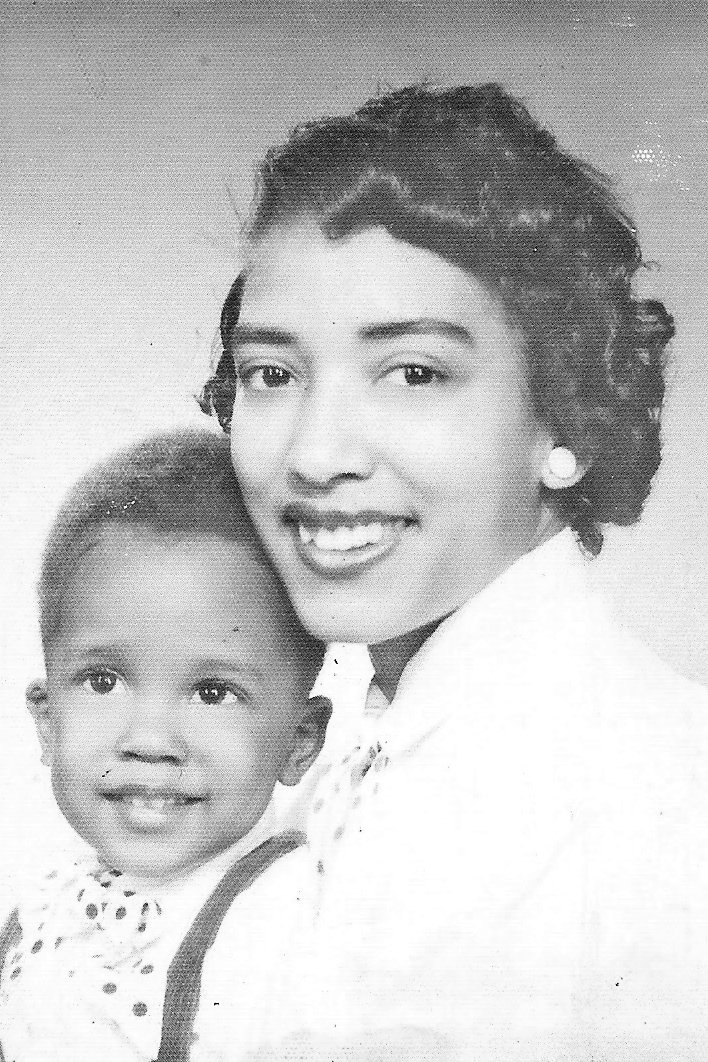
Annie Doris & Douglas (~1958)

[Originally published September 30, 2011 ]

What I Know About Being Poor

What I know about being poor

Being poor is worse than having a disease. When you have a disease, you have the hope that someone will figure out what it is and you can cure or manage it. Being poor leaves you with no hope of rescue. It’s a lot more than the difference between to have or have not.

Being poor is government issued tube sliced baloney sandwiches and cheese on white Wonder bread. It’s fruit cocktail in lieu of fresh fruit. It’s politicians determining what you have, when you have it, and when you have reached your limit. It’s standing in long lines for handouts you wouldn’t take if you had money. It’s being subjected to other people’s disdain. It’s being on the short stick of the arrogance of someone else’s nose in the air. It’s spit where polish would go. It’s paper in the bottom of shoes that long ago lost their usefulness from a style era before you were born. It’s hand-me-down books in school when you can’t afford to buy your own; books earmarked, highlighted, with edge notes and unrecognizable stains on the pages.

Being poor is having a special card at the grocery store where uneducated clerks become managers of what you want to charge, who feel free to give you their unwarranted opinion of what the card will cover. It’s buying cheap where buying bulk would be more advantageous. The difference between counting the right calories to eat, and affording only the wrong. It’s the difference between cable and local channels.

Being poor is having to sit with the unwashed masses on busses and subway cars and being felt up when you pass by. It’s inserting boundaries on your travels that stretch beyond the bus/subway route. It restricts your travels to adventurous things outside that boundary. It’s brown-bagging greasy sandwiches or leftover fried chicken in the corporate lunchrooms where your bag sits among the cottage cheese, yogurt, yesterday’s take-outs, and sparkling waters. It’s knowing you’re not invited to after-hour events because you’re, well, poor.

Being poor is where you’re considered uneducated, stupid, and even ill equipped to vote. It’s government workers prying into every measurable unit of your life and trying to control your every move. It’s untrained workers who envy anything good you’ve acquired, whether earned or inherited, and want it gone so they can take more joy in your misery.

Being poor controls where your kids go to school, where you live, where you shop. It’s government workers who say they want you to do better, but want to control how fast that “doing better” is. It’s being punished for trying to save. It’s having your money docked if you get a raise so that saving and doing better continues to be that carrot mocking your horse-drawn life.

Being poor is the difference between borrowing and owning. Even if it doesn’t take away your dreams, it impacts the grandiosity of how you dream. It’s being limited whereby paying cheap is short-lived and a dollar more would make a quality buy last longer; quantity versus quality.

Being poor impacts the dreams of your children, some more than others. It controls with whom your children play, what sports they can play, what toys they can own. It’s having their names on a list so their teacher can have them get their subsidized food when their friends have lunch boxes complete with Tupperware containers so all items remain separate and small freezer packs inserted in a corner of the box to keep it fresh. It’s having teachers who “know” your story and know they see you differently—with a tainted view of your physical person, not of your capacity to–BE. It’s giving other kids something to laugh at when you have to write that first composition every year (in English class) about what you did or where you went over the summer.

Being poor makes a preteen a babysitter before they know how to take of themselves. It’s knowing that your child can’t study because they’re scared of gunfire, or the noise in the building is distracting. It’s dealing with the constantly overwhelming smells of others’ food filling the hallway air where no fresh breeze is allowed. It’s the knowledge that your child can only choose between a recreational center for sports, and a gang for survival. The difference between joining a gym and cleaning one. It’s watching your child dumb-down to keep from standing out. It’s seeing your prepubescent girls being taunted and sexualized by the predators in the neighborhood.

It’s those rare parents who insist on teaching their kid to say “please” and “thank you” in a no-pleasing, thankless world. It’s rearing kids in dank, dark buildings with dank, dark hallways and in bedrooms with little chance of fresh air or room to run. It’s being financially segregated, of which racially is a byproduct. At its worst it is being an individual family unit where fear called “no see-no tell” is the dividing factor.

It’s sleeping six to a room built for two in a bed built for three—maximum. It’s a clothesline where a jump rope would be. It’s lowering the odds of your child being discovered for their talent. It’s lowering the odds of your child going to a school that focuses on their major instead of a community college of general studies. It’s your child settling for a stray cat or pit bull when a Cocker Spaniel is more compatible with their nature. It’s only having leftovers to feed the dog that’s not on your budget, but gives your children some measure of happiness.

Being poor is the difference between having your mother with limited experience, fry your hair in the kitchen because you can’t go to the local hair stylist. It allows random people the freedom to discuss your finances aloud so no one can tell THEY are doing worse with their own personal accounts. It’s using cheap relaxers, because the creams for natural hair is expensive, and before you learn you can make your own inexpensively. It’s having to choose which bill to pay, which to defer, and dealing with the constant wrath of whoever is not paid.

Being poor even impacts your religious choices to either what is within walking distance or trolley line even though your beliefs lie elsewhere. It injects preachers or their First Lady to feel important, benevolent because you need a loan so your child can participate in something. It’s being forced to take baskets of food items that someone doesn’t want in their cupboards and you are expected to be appreciative with no hint of dislike or resentment to accept things you don’t even eat. It’s another way to make others feel benevolent and hold you accountable to acknowledge their goodness and mercy.

Being poor is the difference between eating healthy and fast food. It’s being limited to a bus route. It’s going to universities where dentists-in-training do your dental work and you take what you get. It’s using mental health clinics where the staff operates by number rather than by individual. It’s hoping your kids didn’t see the commercials of some new toy near the holidays. It’s saying you can’t afford something when you want to do more. It’s crying into your pillow at night from the overwhelming frustration of it all.  It’s staying in on the weekends because you don’t trust your neighbors to watch your children because you see theirs standing on street corners past even your own bedtime.

As a child your view of being poor creates anger without understanding why you are angry. It’s watching your parents fight about what’s important for bills, your education, their jobs, or just out of the frustration of not being allowed to choose. It’s seeing your father emasculated according to the whims of social services. It’s seeing your mother’s pain at having to leave you home when you’re sick because she can’t afford to stay home and take care of you. It’s being angry at the invisible state of hopelessness and taking it out on whomever is closest or convenient. It damages who or how you love, and sometimes how long your relationships will be. It’s a snapshot (hopefully) of your life that is branded in your mind and plays a role in your future choices.

Being poor makes adults turn to liquor and drugs to have some type of control in their lives. It starts off just to get you through the day, then this pay period, then this month, then you lose control and it takes over your life. It’s seeing misery in being controlled by a substance or controlled by an agency standing by to take your family apart. It’s the despair in living in subsidized houses/apartments that no one would voluntarily choose to live in and pay rent for, located in neighborhoods that are dangerous to your well-being. It’s living in substandard housing with coal-fueled heat and claw-footed bathtubs when homes of the privileged have had showers, gas and electric heating for years. It’s not being able to pay the utilities so you go to school/work today smelling like yesterday.

Being poor is the difference between generic store brands versus USDA approved. Or the difference between taking a two-week vacation, and not having to go to work for two weeks. It can be the difference between going without the necessities to survive, and taking what’s not yours. Between hearing and listening. It’s hearing the public laugh and mock your child’s name when there are privileged white kids who carry names like Coco, Harley Quinn, Pilot Inspektor, Moon Unit, Jet, Apple, Diva Muffin, Daisy Boo, Atticus, Banjo, and Calico.  Between having your child labeled a gang member no matter how untrue simply because of their creative name, socioeconomic status, and neighborhood. Between burying your children too soon, and having the county cremate them as indigent because you can’t afford to bury them.

Being Black and poor is a whole other level of bondage. Being poor messes in every way with your sense of hope. It is being thirsty and only seeing water as a mirage on the periphery of hope. It’s feeling despair where hope should be. It’s being angry at being beyond the grasp of hope. It puts an unwashed, blurred filter on your life’s lens that you use to see where hope lies. It’s feeling as if God has deserted you when He may not be saying yes or no, but simply–wait.

[Originally posted 7/9/14]

CRS Can Be Debilitating!

Okay. I need to come out to all my friends and family. I suffer from the little known disease called CRS. Yes, I can admit it now that I’m more secure in who I am (or think I should be).

The first time I heard about CRS was from a friend of mine, Terry Cross, a retired Navy guy at church. We were just joking around and, BAM, Terry admitted he had it. Wow! I thought I was the only one, but soon noticed that it ran in my family, but mostly with the older folks. If that was the case, I thought, I’d be fine until I get older. Nope. It happens to younger folks, too; it only gets worse when you get older.

Then I began to do so research and learned it’s more prevalent than I originally thought. It affects what I thought I said, what I thought I did, when I thought I did it, how I thought I did it, how long I thought I did it, where I thought I was when I did it, and even who I did it to. At one time it seemed like it would be a good dissertation choice, but I couldn’t find any professor who would approve the topic.

Unfortunately, the older I get, the more it affects my life. Just recently I got into an argument with my daughter about how to train her dog. I thought we were on the same page, but she kept telling me I wasn’t doing what I said I did (she can be so thoughtless). The argument bothered me so I decided to refresh my understanding of what CRS is, so I Goggled it and learned the following:

CRS can be a crippling disease. It affects what you thought you said, what you thought you did, when you thought you did it, how you thought you did it, how long you thought you did it, where you thought you were when you did it, how often you thought you did it, and even who you did it to.

By golly, that’s EXACTLY what I thought it was, but my daughter might have been right and I just forgot! Well, because the website had an additional symptom, I thought for years it couldn’t be me, but then I realized that the first time I researched the topic I only had two symptoms; now I have all except one.

Thus far there is no medication to treat the symptoms and the only thing close is Lumosity, which keeps you on a treadmill of answering questions and completing puzzles. You may know this disease by its full name, can’t remember sh*t!

So, the next time you can’t remember sh*t, try to find the CRS site and see if the symptoms fit you. Unfortunately, I can no longer find the site. In fact, none of this makes sense because I thought I was writing about dog training. Dog training? Where did that come from? We have a dog? Sh*t! We have a DOG! Don’t know if it’s a male or female (maybe it’ll come to me later, or maybe I should just pick it up an look). Pick what up? Look at what? Sh*t! There it goes again. I can just see a worm crawling through my brain like a Pac-man icon eating up those lonely cells fighting to hold on. Wow, Pac-man! Where did that come from?

Anyway, you get the picture. Picture? What picture? CRAP! Stop that! Like I said, sh*t creeps up on you out of nowhere.

[Originally posted 2/25/14]

Who has a right to choose your ethnicity, you or society?

I recently read an article called, “White On Paper,” in which the author discussed the issues he faced as a biracial child in a predominantly white world. In part he says:

“Isn’t this why we love movies like Dances with Wolves and Avatar? They capture our imagination (as well as Best Picture) because they have The White Savior — white people deciding to help an oppressed people and coming to identify as that people. We write Sir Walter Scott’s Waverley over and over again because we love that story so much.” John Metta (2015) [From: https://thsppl.com/white-on-paper-ca337ba3381a 8/21/2015]

This topic of the article speaks to my heart and way of seeing life. An example of that played (and continues to play) out in the media with different people. For example, I was in awe of how the media and other Black folk banded together to slaughter Rachel Dolezal, a white woman who was accused of cultural appropriation, or stealing from another culture (Black) without permission, although I can’t figure out who she would ask for permission. The whole thing entranced, really. You see that, and what happened to Shaun King having to defend himself as biracial, reminds me of how the world treated my fair skinned mother.

In my teens my family lived in Milwaukee, WI. In her late 40s (I think) my mother was very proud that she finally got her drivers license. While at the DMV, when she handed the clerk her application, she didn’t mark a box under ethnic code and when the clerk asked her what her race was my mother said “American,” and refused to say anything other than that. In her mind she was refusing to be put in an insignificant box by a low level employee on a government form. And like Metta (above) said in his article, it was probably a question the clerk was required to ask, as uncomfortable as it was to him, but his job called for every box to be filled out before the form could be processed.

When my mother refused to identify other than “American,” the clerk, probably presuming she had to be white because he couldn’t see an African American as “American,’ checked the box he thought she fit it—Caucasian. My mother was so tickled she brought the license home and laughed as she told what had happened. While I thought it was pretty funny, my older brother, Fred, the militant, was furious. He practically demanded she go back and get it corrected. My mother, on the other hand, seemed to take it as a personal coup. I don’t remember if she left it like that, or for how long she left it like that, but she really pulled one over on the man. What I learned from that, but didn’t quite understand for some years, was that white people don’t necessarily associate being “American” with Black people, even though males in every generation of our family served in some branch or other of the military.

I can go back to the census forms back in the 1800-1900s and see the same thing. I can say with little fear of error that all census takers were white, therefore, each person had the power to classify someone as being “in” or “out” as they saw it. If the family looked like poor whites, down to the blue eyes, and the census taker was from another county and didn’t know these were descendants of some Black field hand, cook, or servant girl, the family could be documented as white and could stay that way if no one knew any better. If the census taker was unsure and the person had some coloring in their skin, they could be documented as “mulatto,” without ever having to show what they were mixed with. At different (and historical) points in U.S. history this could result in race mixing with whites, Mexicans, Asians, and/or Native Americans. It is no wonder that there are Black descendants still passing as white these generations since; many never knew their genetic history.

As Metta (2015) says, “In the context of a society founded and run on institutionalized dominance, the question of whether someone is ‘right’ (in color, sex, culture, gender, ability, etc.) is answered by the dominant demographic. That answer comes entirely from the relevance of the dominant demographic, from their desires.”

There wasn’t then, nor is there now, a foolproof way to determine someone’s ethnicity, which is why this whole race thing is so ridiculous. A fair-skinned Black woman could birth three children by the same man and one may look white, one mulatto, and one Black. One of the reasons many Blacks “passing for white” left the area of their birth could have been because everyone knew who their mama was. One sibling might pass and move north to live as white because of the freedoms that were provided, all the while dreading having their darker skinned siblings come visit and blow their cover.

I can remember sitting in some white (male) professional’s office trying to adopt another child, with this white man asking me what I was. And just as clearly, I remember being confused because in my head I was thinking, surely he can’t be asking if I’m Black because it’s obvious that I am. Being Black was all I’ve ever known. So I asked him if he could explain what he meant and he responded that it was clear that I wasn’t all one ethnicity so he wanted to know, I guess, what I was mixed with. Again, in my head, my thoughts are flying about (still confused) thinking, my mother’s Black, my father’s Black, what does he mean “mixed with?” He was not convinced that I wasn’t mixed with something, but it seemed even then that he wanted me to be mixed with something because I appeared successful, owned my own home, had a good job and money in the bank.

Another thing that no one else has discussed to any degree is coloring itself. When I lived in Milwaukee where the sun is sparse, I was fairer than I am now, long since baked by the California sun. Only when I take off my watch, or sit where you can see where the lighter skin separates from the darker skin on my thighs can you tell how the world saw me when I lived in a colder climate. Too, I can be back East a couple of weeks and come back noticeably more fair skinned. My husband, who is a tennis player (also not mixed) has the same issues and sometimes it looks like he has socks on when he removes his socks and shoes and you can see the dark tan areas in stark contrast to the lighter (usually covered) skin.

Back to my younger years, I can remember my mother on those rare occasions she had to go to my school for some reason, walking in, heels, stockings, hat, gloves (wearing one, holding the other), dressed to the teeth (as they used to say), and looking like Lena Horne. It wouldn’t take long for my peers to ask if she was a white lady. Many times in my younger years I was asked what my mother was. That was aggravating to me because she was always “Black” (Negro at the time) to me, so why would people ask that? I couldn’t decipher whether or not they were messing with my head. To clarify it all, on all census forms I could find, when my mother lived with her biological family, they were all listed as mulatto for decades. When she married and lived with a Black man, she became Black according to white people’s rules (Black by association?).

Another memory is of my mother’s father whom everyone called Papa. He lived in rural Mississippi and came to visit us when we lived in the projects in Milwaukee. It was literally the middle of the night when he woke me and I opened my eyes to this white man with pretty blue eyes staring back at me and wondering if we were being arrested; I was terrified. Insert the fact that my mother was on welfare and the social service workers made surprise visits to the homes and went through every cabinet and closet, even pulling back the blankets over sleeping children to make sure there was no man hiding there, which would allow them to cut off the welfare check. As slowly awoke I heard my mother laugh, and my grandmother (my mother’s step-mother) say something to him about scaring me to death. It was after this that I looked at my mother suspiciously wondering what she wasn’t telling us, because clearly to me, her father was white (he was biracial, but enough to easily pass—he didn’t, nor did his six (one, the eldest, was an “outside” baby) children).

Metta (2015) also says, “And in a white society, white people get to define when someone is Black based on how they want to see Black people at that moment in time.”

That brings to mind another incident, this one involving one of my husband and my (three) biracial children. Our daughter is African American-Filipino mixed and darker skinned. The twin boys are white-African American mixed and fair skinned (by Black standards), and one decided to play hooky from elementary school. What I remember is that he and his friends were captivated by a snake they found interesting on the way to school so they followed the snake into the canyon near the house. Well, the school called and said he had not reported to class and we panicked. We left our jobs, practically flew home and canvassed the neighborhood. After circling the block a couple of times by car, we parked and went on foot, stopping to talk with a white guy who was working on his lawn. We asked if he had seen a boy about so-high, curly hair, walking in the neighborhood. Without hesitating the neighbor said, “You mean that Black kid and the white kid?” It threw me for a minute because race was clearly distinguishable to that man, while I always thought they were passable. Well, we found them in the canyon and meted out the proper punishment. Not that our son knew about the conversation, but he and his brother, now adults, wear their hair cut so short it can fool some people. Metta (2015) also addresses the issue of how hair plays into the narrative.

All of my life I have seen and/or know (personally or of) people who feel so strongly about a different culture that they adopt it as their own without a clear conscious decision to do so. Rachel Dolezal, I think, fits into this. In the past, musicians have adopted the singing styles, and/or musical renditions, created by Blacks because the music speaks to them on some level. Young kids, particularly boys, hang out with the “cool kids,” who are Black boys and in doing so begin to adopt their clothing style, their way of talking, and their mannerisms; and sometimes even their dreadlocks. I’ve never heard other musicians or entertainers accuse them of misappropriating the Black culture. What makes this different? Even the (short-lived) comedy, Fresh Off The Boat, was a humorous reminder of cultural appropriation with an Asian kid identifying with being solely Black so much, everything he did was as his Black persona.

And, while whites have the liberty to be Black one day and slip back into their white world the next doesn’t bother me. Why should it bother you? Does it make you aware that anything you do is “taken by the white man?” There are no trade secrets being exploited, no spying to uncover. And if the people don’t grow out of it let them identify as they wish. I can see that there is, however, some harm done when a culture is appropriated and someone makes money from it without investing in the culture they took from.

I read the mixed responses to Black passable people from those who insist they identify with their Black ancestry and condemn them if they don’t, and those who identify but are condemned because they’re not Black enough. We can’t, as a people, tell them that denying their Black ancestry is wrong if we can’t say the reverse. If they are Black/white mixed why is no one crying out that they should not deny the white part of them? Why don’t Black people understand this genetic quandary? This leaves our kids screwed up.

We have many mixed race children in my families, but most are Black/white mixed. In junior high school my Black/Filipino mixed daughter wanted to hang with the Filipino kids AND with the Black ones. Both groups insisted that she chose (she chose Black because that’s what her sister was), but they wouldn’t allow her to fit into both (self-identify); a result was her becoming closed off to her biological mother’s Filipino heritage. So this one-drop rule seems to permeate cases where those whose one-drop is Black is concerned, must be applied as soon as our society deems it appropriate.

And what responsibility do the (mainly) white mothers of these children have in maintaining a cultural connection to both sides of their child’s world? She can’t just drop them off on a nearby playground and make them fend for themselves (you better learn the other half of your culture or don’t come home). If the kids are young and the (Black) father is no longer in the picture, but the mother accompanies them to Black (or other) cultural events, are the Black folks going to get on her case because she’s not Black (and shame on them if they do)?

The boy/girl of our twin mixed race son are both fair skinned with straighter (more European-type hair. My other Black/white mixed grandson (we have two of both gendered grandchildren who are mixed) has hair straighter than his (same mix of races) uncles who keep their hair close cropped, but if you touch it, you will know, while his sister is more identifiable as Black, including her hair (Blacks would call I good hair). I heard a (white) family friend describe this grandson’s hair as kinky and that threw me for a loop because there’s not a kink to be found. Thick, yes, kinky, no. And under that beautiful head of thick straight (with a slight curl on the end) hair are beautiful bright blue eyes, and dimples. At this juncture he very much identifies with his father, who is Black. So far the support he receives from his father makes him a strong advocate for posturing as a strong man and saying, “I am a strong Black man,” and we all fall out with laughter.

There is little hope that the children of the twin sons who are biracial and married to white women will help their children identify with being Black, or Black culture, although they do not deny their father. They live in a world surrounded by white culture that is controlled by their white environment and their experience and connection with the Black culture is so sparse as to be almost negligible. Even if these two grandchildren get older and want to claim their Black heritage, I’ll bet the “cool Black kids” (and their parents) will be all over that because they won’t be Black enough, and they won’t know enough to fit in. In some ways that’s sad, but they are hardly unique in that.

It is obvious that however an adult identifies with his or her mixed race self, it is going to reflect on how their children identify and there are all sorts of outcomes for these instances, none are the same, but could probably be categorized by someone willing to do a study. Since society won’t allow them to claim both cultures (well, census finally does) and they must identify with one ethnic group or the other, shouldn’t that child have a choice? If you didn’t grow up in the Black culture how can you identify with it just because you have Black genes, or vice versa?

And in the reverse, if you’re of Italian heritage, for example, and grow up surrounded by Black culture all your life, so much so that you can’t even separate yourself from it, why can’t you choose your fit based on your known culture? After all, I’ve seen Black artists become ex-pats in France and come to identify totally with being French. When they come back to the states they no longer fit into that tiny neighborhood mentality where life is clearly black and white. Who do they become then?

But for our blue-eyed elementary-aged grandson whose father is Black and mother white, he identifies with both and because he has Black relatives in and out of his life on a more regular basis, I wonder if his view of what that means will change as he gets older? Will the world still be so evil that he has to make decisions about which he chooses to be when he gets older? Does he have to choose when he gets older? Will the cool guys at his school be white or Black, and will they accept him as he is by not considering him not white enough or not Black enough? We have to work to make this a less stressful future for the ever-growing groups of mixed race children.

Kujichagulia – Naming Ourselves

This is focused on the (relatively) new television show called, Black-ish (http://tvseriesfinale.com/tv-show/black-ish/) and the controversy regarding the title and content.

No, it’s not cancelled, that is the link that a shows cancelled and renewed shows. But, I’ve been looking at comments on fb about the title (mainly) of the show and for some reason it doesn’t offend me as it seems to have set some people off.

I can remember making comments about someone being “blackish” and whoever I was talking with would laugh along with me. I can, also, remember when my son, who had been in majority white schools all his education, then I snatched him out of it and put him in a majority minority (Asian, Black, Mexican) school. He went through culture shock even though he was quite clear he was Black/African-American. Maybe he only saw himself within that white context as such an identity because I know they had no doubts about what his heritage was.

Another of our sons who is mixed race ditched school one day here in San Diego some years ago. We took off from work and went around the neighborhood scared as hell that someone had abducted him. We came upon a white man working in his yard and asked him if he’d seen two boys (he ditched with a schoolmate) walking around. He responded, “oh, you mean that Black boy and his white friend?” It stopped me in my tracks and made me wonder if he knew that when people saw him, they didn’t see a blond, curly-haired, fair skinned boy, the white saw Black before they saw him.

The same with one of my daughters who went to a majority Black college after spending all of her primary and secondary schooling in majority white schools. That’s where Black girls called her “white girl” for the whole year she was there.

I guess what puzzles me, especially following Raven Simone’s comments about her color, is that even though we (some of us) celebrate Kwanzaa, which has Kujichagulia (Self-Determination) for the second day (it’s defined as, “To define ourselves, name ourselves, create for ourselves and speak for ourselves”) we only believe that if we follow the mainstream naming.

So, why can’t we name ourselves? Why can’t WE decide for ourselves what we want to be called? We didn’t all agree to call ourselves Negroes, or Afro-Americans, or Colored, or Black, or even African-American, or the “n” word. Why can Raven be “American” and nothing else? Have we subconsciously slipped into what we (as a people) have fought against all this time–naming ourselves?

When the Africans and Puerto Ricans and Jamaicans, and other islanders began to come here in large numbers, they didn’t want to be called African-American. Black Latinos didn’t want to be identified that way, nor any islanders who love their culture. But we don’t fight them. We turn our attention to an American-born Black(ish) woman who wants to name herself and rally against her as if she is unique in what she’s doing.

I understand that for many kids who are growing up with great wealth, like the rappers’ kids, or the entertainers’ kids, or the Black professionals’ kids, don’t grow up with the same values as some inner-city kid. Their parents are working hard to have them accepted as who they are without regard to their race, but then they have to fight their own people who want to make the determination about who they are.

If a kid is half white and half Black, can’t he or she determine where he or she wants to fit in? What he or she wants to be identified as? Does their blackness overcome all other genetic matter? That’s important to know because we have many mixed race kids in our family.

We don’t all share the same experience even though we may have lived all our lives in the good ol’ U.S. of A.  What I want to celebrate is that a group of Black folk have a new television show on prime time–PRIME TIME! They show the struggles that some Black people go through with identity. Not all Black people; some Black people. I think the kids on that show are absolutely marvelous actors as are the leads as they bumble through parenting dilemmas. Let them have their kudos for being successful in breaking through that barrier once again.

Identify or not–that is the question

So this, whether we have the right to identify ourselves when we’ve done nothing wrong, is a damned if you do or don’t situation. We (citizens) are led to believe that we have the right to refuse to identify ourselves when pulled aside, stopped and frisked, or pulled over by the police. We are given mixed messages from different legal sources about whether or not we can refuse to identify ourselves and the police have to tell us why they are detaining us. The article, “Can You Refuse to Identify Yourself to the Police?” (http://m.laweekly.com/informer/2014/09/17/can-you-refuse-to-identify-yourself-to-police), still talks about both sides of the issue without giving readers a clear yes/no answer to that (sometimes lethal) question.

In the article there is a statement about officers having a “broad description” of a suspect (which is why they can stop you), is suspect in itself. That “description” can be fabricated on the spot and used to harass someone. And no one can say to me that “if you’re innocent you have nothing to worry about.” That’s bullish*t.

Way back in the 70s when my oldest son was small and I was in my fearless early years, I drove across country after a visit in Milwaukee going back to my home in CA. In Texas I was pulled over when passing through a roadblock when a cop looked at my son and me and asked me to pull to the side. It felt like it was 1000º in the Texas heat and I couldn’t sit there with my air conditioner running and we had no bottled water. I must have been there an hour at best as I watched this cop wave hundreds of cars past (all white folks that I saw), my son and I sat and sweated in the car. I was alone, scared, unsure of what was going on, fearful that I was in the dreaded south, and wondering why I was singled out. I had to keep reassuring my son that everything was going to be all right and that we would get something to eat when we could go.

Finally, the officer sauntered (and that’s exactly the way he walked) his fat ass back to my car and said I could go. I asked why I was pulled over and what was going on. You know what he (hurriedly) said to me as he was signaling for me to get back in traffic? He said they got a report of a Black MAN robbing a store and escaping in a blue car. Described as a shorthaired Black MAN in a BLUE car (can’t remember the model he said) with Texas plates! He stood there with his sh*t-eating grin on his smart-ass face at me through my window…the window, I might add, of a RED Pinto with a CA plate, and with NO trunk so there was no one hiding in there. I even had long hair at that time.

Again, I was alone, female, in Texas for G-sake, with a small child. The relief was mixed with anger when I was finally released and I can still remember the emotion being so strong I could hear my heart pounding in my own ears so strong I could have stroked out. I couldn’t even cry when I was so angry because I didn’t want to upset my son. Worry? Oh, yeah, I worried about all the unknowns in my situation. The frustration, disrespect, and helplessness, it was AWFUL. AWFUL. I can still feel the mental anguish after all these 40+ years later.

So when I hear Black men talk about the degradation of being stopped while Black, questioned, and disrespected in what amounts to having no rights, I understand. I get it. I’m not a man and I’ve been there and it was so frightening that I was even afraid to tell my family because they would have chided me about driving by myself, which they didn’t want me to do in the first place.

In his later years, Daddy told me about being arrested in Mississippi in the 1930s after he passed a white woman on the road because she wouldn’t move over, it was another emotional situation because when he got to town the sheriff arrested him because the white woman was pissed that an uppity Black man didn’t stay behind her until SHE was ready for him to pass. He was put in jail, he said, and no one knew where he was or for how long he would be there. It was Mississippi. The South. There were no attorneys for Black folk then. He was afraid that my mother was alone with an infant and didn’t know where he was. No one you could call. No “one call” rule when arrested.

In good ol’ boy country Daddy could have been killed and no one would even suspect and that was foremost in his mind the whole time he was there. Imagine how he had to soft-shoe his way out of that situation by remaining calm, saying yes sir, no sir, to an officer who called him, a grown-assed man, boy, and that pissed him off as well. Now, Daddy was over 100 years old in 2008 when we had this conversation last, and I can tell you that you could still feel his anger from the situation. He was still visually shaken and the words were spoken through clenched teeth. You get “past” it; you do NOT get “over” it.

As you can see this damned if you do or don’t article elicits more emotion from me because it doesn’t leave me with any resolution about what is right, or what is OUR right as citizens. It seems to boil down to us constantly being in a police state because they have the right to do as they please regardless of what is morally right. And it sure doesn’t factor in those racists with a badge, but I know that’s almost impossible.

I used to interview applicants for the SDPD for a couple of years as that “citizen” member (and only Black/person of color) of their interview board and we, as a group, could see (feel) when someone was going to be problematic. We discussed it after each applicant to decide which pile to put him or her in (advance or this is the end of the road for you buddy piles). Somehow the interview boards are not picking that up in many places, or maybe they see themselves and want a larger group in which to hide their misdeeds.

At the end of the article it says we just have to comply. Period. We might think we have a right to refuse to identify ourselves, but that’s a false sense of our legal standing. Failing to comply means we can be locked up and (in some places) have our DNA forcefully taken, fingerprinted, have all our personal effects confiscated, etc. A record of that incident (our standing in our truth) will be in the system to follow us forever, which is what we didn’t want in the first place.

The Issue of Guns in Today’s Society

Guns

The ongoing issue and dialogue IS NOT whether people can or cannot own guns. That was put to rest a long time ago, but some people haven’t caught up to the current dialogue and hang onto thinking this is the current administration is making an attempt to remove guns from gun owners. How frail their research…and thinking. The debate is really about what constitutes constitutional rights of the people and if those rights allow you to do whatever the hell you please. Let’s talk about the “right” to bear arms (i.e., open and carry).

But first, we need to recap on one of the major issues in the debate, the Brady Bill. Jim Brady, President Reagan’s press aide, was never against gun ownership, had the nerve to want to keep guns out of the hands of people like John Hinckley, Jr., who, in an attempt to impress actress, Jodi Foster (she wasn’t impressed), shot (then) President Reagan and Jim Brady. Both Brady and Reagan were gun owners.

“(CNN) — In 1981, James Brady was shot in the head and gravely wounded in a shooting that also wounded President Reagan — despite their both being surrounded by plenty of extremely well-trained “good guys with guns.” At that time, federal law set conditions, such as a felony conviction or being involuntarily hospitalized for a mental illness that prohibited a person from possessing firearms.

The 1968 Gun Control Act had established record-keeping requirements and regulated interstate transactions of firearms, but there was no federal law requiring proof from a prospective buyer that he or she was not prohibited from possessing firearms. It was, in essence, an honor system. You could purchase as many firearms and as much ammunition as you liked, as long as you signed a form stating that you didn’t meet any of the disqualifying conditions.

While James Brady started his long road to recovery from his brain injuries, he and his wife, Sarah, began what has been a three-decade endeavor to strengthen America’s gun laws and prevent others from becoming victims of gun violence. The Bradys and the organization they have helped lead have been successful in:
–Expanding disqualifiers for firearm possession to include perpetrators of domestic violence
–Advancing laws to prevent gun violence at the state level
–Litigating legal cases to protect the public from unsafe business practices in the gun industry
–Educating the public about how to protect children from being shot
But Brady’s best-known legacy will be the federal law he championed and that bears his name, the Brady Gun Violence Prevention Act.
The Brady Act was a huge leap forward toward fulfilling the objectives of the Gun Control Act of 1968: keeping guns from dangerous people. It required licensed gun dealers to submit information on the identity of prospective gun buyers to the FBI, which could then determine through searches of databases of criminal records whether the purchaser was prohibited.
Through this law, millions of prohibited buyers have been identified and prohibited from purchasing firearms from licensed dealers.”

Posted: August 5, 2014

“Reagan, who was a rancher, was never one for gun control. Brady, despite serious injuries after having been shot in the head, became a tireless advocate for gun control, aided by his wife, Sarah Brady. And more than three decades later, the Bradys’ efforts, which should have changed public opinion, given what had happened, have been for naught.

Court decisions have eviscerated attempts by states and jurisdictions to limit gun violence by controlling access to guns. Even a no-brainer of a bill in Congress, a measure that simply would have expanded background checks to include purchases on the Internet (where potential terrorists are thought to get their weapons) and at gun shows was defeated, as too many lawmakers feared the power of the National Rifle Association.”

The question keeps coming up about the Brady Bill and Brady being a gun collector. One person even called Brady a hypocrite because they felt that he couldn’t be both a gun collector and advocate for gun control (as if in their world, it’s all or nothing). And people also questioned whether or not Brady had the right to change his mind and stance on how he felt about the issue of gun control after being shot in an assassination attempt on Ronald Regan’s life. Sigh.

“The Brady Bill was a response to the use of a handgun in the attempted assassination of President Ronald Reagan in 1981. Four people were injured in the attacks. The Brady Bill, formally known as the Brady Handgun Violence Prevention Act, was passed by the Congress in November of 1993 as an attempt to restrict access to guns. The restrictions in the bills were not actually new. The Gun Control Act of 1986 established the laws governing who was able to obtain the weapons.

The Brady Bill only served to make the enforcement of previous laws easier. It originally established a five-day waiting period before a gun purchase could be completed. After challenges to the constitutionality of the bill the waiting period lapsed. In its place a federal system of executing background checks was established to make sure that only people who were not prohibited from doing so were allowed to purchase guns. The Brady Bill has weathered criticism well, and has served as a foundation of the gun reform movement for more than fifteen years.”

It is very difficult to argue with people who do not do their own research, but are quick to buy into those sound bites so handily processed by the republibandits. [NOTE: A bandit is defined as, “One who cheats or exploits others,” which has been a tradition of the current republican party, so this is a deliberate use of the specifically coined word.]

So, you see, this is NOT about taking someone’s right to own guns. It never has been. It’s just that some people have gotten stuck there in their arguments because that’s all the republibandits have prepared them to fight against.

The Brady Bill was merely to keep “guns from dangerous people” and make gun dealers complicit in trying to keep track of whom they sell guns to by keeping detailed records that is stored into national databases.

My mother owned a gun. Daddy owned several. Two of my brothers own guns, as do a couple of nephews and sons. These are all law-abiding people who were responsible for their gun ownership (well, maybe not my mother). Anyway, gun ownership, in itself, has never been an issue in my family.

What bothers me immensely is when people can’t defend their positions about gun ownership and get into name-calling and other putdowns to anyone with a differing opinion. No one is out to take his or her guns, so get a better argument! No one is trying to keep them from letting their kids get ahold of their (“I swear I locked it”) gun boxes and kill their friends or themselves. No one is trying to take away the pain of countless parents who have lost a child because they owned a gun that the kid found, played with, and shot him/herself and/or someone else. That’s their own pain and they’re entitled to it. So then those who argue start throwing around which Amendment right of theirs is being violated and I’ve heard several (even though they quote the wrong ones).

The First Amendment (in summary), is about:
“Congress shall make no law… abridging the freedom of speech.”

The Fifth Amendment (in summary) is, “Protection against abuse of government authority.”

Now, that troublesome Second Amendment is the one that people fall back on. It’s original intent had to do with, “A well regulated Militia, being necessary to the security of a free State, the right of the people to keep and bear Arms, shall not be infringed.” http://constitution.findlaw.com/amendment2.html#sthash.IYlbHM0a.dpuf

But, in 2008, the Second Amendment was redefined to read: “However, the Supreme Court has now definitively held that the Second Amendment protects an individual’s right to possess a firearm unconnected with service in a militia, and to use that weapon for traditionally lawful purposes, such as self-defense within the home. Moreover, this right applies not just to the federal government, but to states and municipalities as well.”

Currently, Alabama, Alaska, Arizona, Arkansas (still disputed), Colorado, Delaware, Idaho, Kentucky, Mississippi, Montana, Nevada, New Mexico, North Carolina, Ohio, South Dakota, Vermont, Virginia, and Wyoming have state policies for people to openly carry firearms.

Some others can do that (carry), but have to be licensed like Connecticut, Georgia, Hawaii (** = licenses rarely issued to individual citizens), Indiana, Iowa, Maryland (**), Massachusetts, Minnesota, New Jersey (**), North Dakota, Oklahoma, Rhode Island (**), Tennessee, and Utah. This second group, those licensed, is more in line with what the Brady Act was calling for, not the wild west attitude of those who can do pretty much as they please.

As you can see, the actual Amendment has NOTHING to do with open-and-carry, which people have begun to associate with the Second Amendment as if it were written into it. There is not now, nor ever has been, any Amendment that protected people’s “right” to carry guns in public, or frighten people, or shoot unarmed people who are not threatening them in any way.

There is no distinguishable way to tell if a man coming into your store with a semiautomatic gun is there to rob you and kill all your customers, or just doing his shopping and he needed all that extra firepower because his mind is so focused on hurting others that he automatically thinks everyone is out to hurt him.

So, what are our rights? Well, we have several.

Constitutional rights n. rights given or reserved to the people by the U. S. Constitution, and in particular, the Bill of Rights (first ten amendments). These rights include: writ of habeas corpus, no bill of attainder, no duties or taxes on transporting goods from one state to another, (Article 1, Section 9), jury trials (Article III, Section 1), freedom of religion, speech, press (which includes all media); assembly and petition (First Amendment); state militia to bear arms (Second Amendment); no quartering of troops in homes (Third Amendment); no unreasonable search and seizure (Fourth Amendment); major (“capital and infamous”) crimes require indictment, no double jeopardy (more than one prosecution) for the same crime, no self-incrimination, right to due process, right to just compensation for property taken by eminent domain (Fifth Amendment); in criminal law, right to a speedy trial, to confront witnesses against one, and to counsel (Sixth Amendment), trial by jury (Seventh amendment); right to bail, no excessive fines, and no cruel and unusual punishments (Eighth amendment); unenumerated rights are reserved to the people (Ninth amendment); equal protection of the laws (14th amendment); no racial bars to voting (15th amendment); no sex bar to voting (19th amendment); and no poll tax (24th amendment). Constitutional interpretation has expanded and added nuances to these rights. http://legal-dictionary.thefreedictionary.com/constitutional+rights

Now, did you know we have what’s called “natural rights” as well? We do, even a right not to be killed.

Natural Rights:
The classic definition of “natural rights” are “life, liberty, and property”, but these need to be expanded somewhat. They are rights of “personhood”, not “citizenship”. These rights are not all equally basic, but form a hierarchy of derivation, with those listed later being generally derived from those listed earlier.
Personal Security (Life):
(1) Not to be killed.
(2) Not to be injured or abused.
Personal Liberty:
(3) To move freely.
(4) To assemble peaceably.
(5) To keep and bear arms.
(6) To assemble in an independent well-disciplined militia.
(7) To communicate with the world.
(8) To express or publish one’s opinions or those of others.
(9) To practice one’s religion.
(10) To be secure in one’s person, house, papers, vehicle, and effects against
unreasonable searches and seizures.
(11) To enjoy privacy in all matters in which the rights of others are not violated.
Private Property:
(12) To acquire, have and use the means necessary to exercise the above natural
rights and pursue happiness, specifically including:
(1) A private residence, from which others may be excluded.
(2) Tools needed for one’s livelihood.
(3) Personal property, which others may be denied the use of.
(4) Arms suitable for personal and community defense.

So, while we have rights assured through several means, we have a right to not be killed, which I think, overrules all others. Those of you with limited information just don’t argue if all you’ve got is what Faux News tells you. No one wants your guns, but everyone wants you to be a responsible gun owner. No all people want everyone to have a gun, but most (reasonable) people want gun owners to be responsible and that includes not using those guns to intimidate others. Now let’s have another discussion about guns, but this time, make it about the facts, not your limited opinions.

Tiptoeing through the maze that is my mind